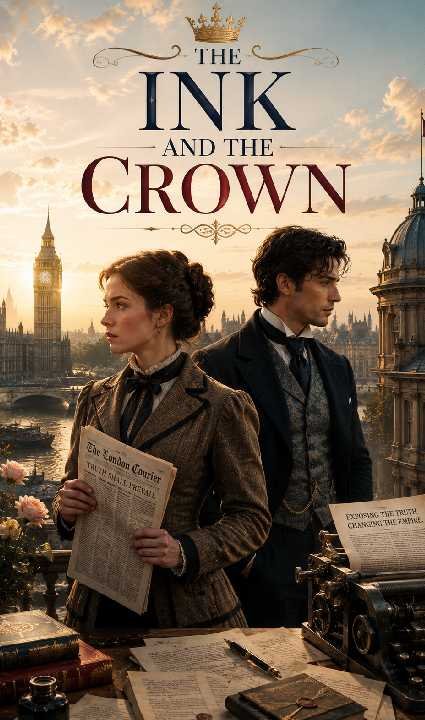
The Ink and the Crown
Read The Ink and the Crown, a historical romance where a fearless journalist and a disgraced lord uncover a dangerous conspiracy that could change Victorian England forever.
Chapter 2: The weight of what is hidden
For the following two weeks, they moved through London like two people pretending not to be working together, which was the only arrangement that kept either of them safe. Eliza pursued the paper trail through company registries, shipping manifests, and a remarkable number of conversations with clerks who underestimated what a woman with a notebook and a direct gaze could extract from a casual exchange. Edmund used what remained of his name to open doors in Whitehall, St James’s, and the particular class of private club where empire was administered over brandy by men who had never once questioned their right to administer it.
They clashed at every meeting. She wanted to publish incrementally, building public pressure as the evidence accumulated. He insisted on waiting for the complete chain one gap, he argued, and the whole thing collapsed. She called him overcautious; he called her reckless. She pointed out that three years of caution had cost him his career; he pointed out that three years of her publication record had cost her every source who valued their position.
They were both right, which made the arguments considerably worse.
The danger arrived on a Tuesday evening in the form of two men outside Eliza’s lodgings in Bloomsbury who were not, she determined within approximately four seconds of noticing them, waiting for a cab. She walked past her own front door without breaking stride and kept walking for six blocks before she allowed herself to think clearly, at which point she thought of the only person in London who would understand immediately what it meant and what to do next.
Edmund opened his door at Holborn at half past nine to find her on his step, hatless, her notebook pressed under her arm, rain on her shoulders, with the composed expression of a woman who was not going to admit she had been frightened.
“They’ve found me,” she said simply. “Which means they know how far along we are.”
He stepped back without a word and let her in. His rooms were spare and book-lined and smelled of coal smoke and old paper, and she stood in the centre of them while he lit another lamp and felt, for the first time in the entire pursuit of this story, that she was somewhere she did not have to be entirely alone in it.
“The last document I need,” Edmund said, setting the lamp down, “is in the private archive of Sir Harlan Mote. He is hosting a reception at his Mayfair house on Friday. I can get us in. But we would need to attend together, as” He paused with the restraint of a man choosing words carefully. “As a couple. It is the only cover that would not invite scrutiny.”
Eliza looked at him across the lamplight. “You are asking me to spend an evening pretending to be your companion in order to steal a document from a man who has already sent people to my door.”
“Yes,” Edmund said.
“Good,” said Eliza. “What time?”
Edmund looked at her this woman who had appeared on his step in the rain and called it nothing and felt something shift in his chest that had nothing to do with the case and everything to do with the particular quality of her courage, which was not the absence of fear but the absolute refusal to let it make decisions on her behalf.
💬 Reviews
✨ Trending Stories
 The Cartographer of Small Things
 is a touching story about grief, memory, and finding meaning in life's quiet, overlooked moments.
The Cartographer of Small Things
The Cartographer of Small Things is a touching story about grief, memory, and finding meaning in life's quiet, overlooked moments.
 The Silence at No. 9
In The Silence at No. 9, a detective must uncover the truth behind a missing man before powerful enemies erase every clue.
The Silence at No. 9
In The Silence at No. 9, a detective must uncover the truth behind a missing man before powerful enemies erase every clue.
 The Wrong Door
When Nora finds her neighbour unconscious, The Wrong Door becomes a fast-paced thriller filled with secrets, danger, and betrayal.
The Wrong Door
When Nora finds her neighbour unconscious, The Wrong Door becomes a fast-paced thriller filled with secrets, danger, and betrayal.
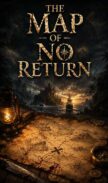 The Map of No Return
 follows a brilliant cartographer and a fearless jungle guide as they uncover a lost city and ancient secrets.
The Map of No Return
The Map of No Return follows a brilliant cartographer and a fearless jungle guide as they uncover a lost city and ancient secrets.
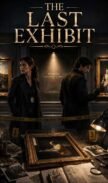 The Last Exhibit
Read The Last Exhibit, a gripping mystery where a detective and a master art forger uncover stolen masterpieces, hidden secrets, and a decades-old conspiracy.
The Last Exhibit
Read The Last Exhibit, a gripping mystery where a detective and a master art forger uncover stolen masterpieces, hidden secrets, and a decades-old conspiracy.
 The Space Between Songs
Read The Space Between Songs, a heartfelt romance about a music publicist and a celebrated songwriter who discover love, healing, and second chances through music.
The Space Between Songs
Read The Space Between Songs, a heartfelt romance about a music publicist and a celebrated songwriter who discover love, healing, and second chances through music.