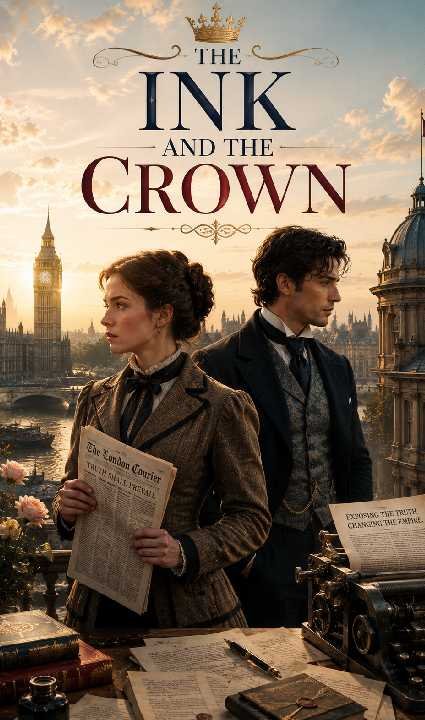
The Ink and the Crown
Read The Ink and the Crown, a historical romance where a fearless journalist and a disgraced lord uncover a dangerous conspiracy that could change Victorian England forever.
Chapter 1: The journalist and the lord
Miss Eliza Vane saw the world in headlines, sources, and the kind of ruthless editorial instinct that had made her the most widely read and most furiously complained about writer at the London Courier in the autumn of 1888. As the only woman on a floor of thirty-two journalists, she had long since stopped waiting for permission to pursue a story and started simply publishing it before anyone could object. But standing in the rain outside the shuttered offices of a minor shipping company in Wapping, holding a letter that had arrived unsigned at her desk that morning, she understood that the story she was about to chase was larger than any she had printed before and that someone very powerful already knew she had it.
She needed access she did not have. Or worse, she needed Lord Edmund Ashby.
Edmund was the third son of a collapsed earldom, a man whose name still opened certain doors even as his finances had quietly ceased to support the life that name implied. He had spent three years in the Colonial Office before a matter of disputed accounts had ended his career there in a silence that was louder than any official censure. When Eliza found him, it was at the back table of a Fleet Street chophouse, nursing a glass of something amber and reading a Parliamentary report with the focused grimness of a man looking for something he had not yet found.
“Lord Ashby,” she said, setting the unsigned letter on the table in front of him without preamble. “I believe you have been looking for this for some time.”
Edmund looked at the letter. Then at her. His expression did not change, which told her more than any reaction would have. “Miss Vane,” he said, in a voice carefully modulated to reveal nothing. “The Courier’s most reliably inconvenient correspondent. Where did you get this?”
“It was sent to me,” she said, sitting down across from him without being invited. “Anonymously. By someone who knew I would not ignore it and could not be quietly discouraged from pursuing it.” She folded her hands on the table. “The letter names three Colonial Office accounts, two of which I have independently traced to a shell company registered in Cape Town. The third connects to a man currently sitting on the Board of Trade.” She met his eyes. “I believe you were dismissed from the Colonial Office because you found this first.”
Something moved behind Edmund’s careful stillness — not surprise, but the particular relief of a man who has been carrying something alone for a very long time. “If you print what you know,” he said quietly, “without the full chain of evidence, they will have it buried and you discredited before the ink is dry.”
“I know,” Eliza said. “Which is why I am sitting at your table instead of at my editor’s desk.” She raised an eyebrow. “You have the evidence. I have the means to make it impossible to suppress. The question, Lord Ashby, is whether you are willing to trust a journalist.”
Edmund looked at her for a long moment in the amber light of the chophouse this woman who had walked into his private grief with a letter and no apology and felt the first movement of something that was not quite hope and not quite caution but uncomfortably resembled both.
“I am willing,” he said carefully, “to consider it.”
💬 Reviews
✨ Trending Stories
 The Silence at No. 9
In The Silence at No. 9, a detective must uncover the truth behind a missing man before powerful enemies erase every clue.
The Silence at No. 9
In The Silence at No. 9, a detective must uncover the truth behind a missing man before powerful enemies erase every clue.
 The Wrong Door
When Nora finds her neighbour unconscious, The Wrong Door becomes a fast-paced thriller filled with secrets, danger, and betrayal.
The Wrong Door
When Nora finds her neighbour unconscious, The Wrong Door becomes a fast-paced thriller filled with secrets, danger, and betrayal.
 The Map of No Return
 follows a brilliant cartographer and a fearless jungle guide as they uncover a lost city and ancient secrets.
The Map of No Return
The Map of No Return follows a brilliant cartographer and a fearless jungle guide as they uncover a lost city and ancient secrets.
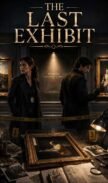 The Last Exhibit
Read The Last Exhibit, a gripping mystery where a detective and a master art forger uncover stolen masterpieces, hidden secrets, and a decades-old conspiracy.
The Last Exhibit
Read The Last Exhibit, a gripping mystery where a detective and a master art forger uncover stolen masterpieces, hidden secrets, and a decades-old conspiracy.
 The Space Between Songs
Read The Space Between Songs, a heartfelt romance about a music publicist and a celebrated songwriter who discover love, healing, and second chances through music.
The Space Between Songs
Read The Space Between Songs, a heartfelt romance about a music publicist and a celebrated songwriter who discover love, healing, and second chances through music.
 The Cloud Collector
, a magical bedtime story where a boy and his best friend follow enchanted clouds to restore a sky that has mysteriously disappeared.
The Cloud Collector
The Cloud Collector, a magical bedtime story where a boy and his best friend follow enchanted clouds to restore a sky that has mysteriously disappeared.